OptiCore Pro Official Website › Results Timeline
Results TimelineOptiCore Pro Results: How Long It Takes to Work
Buyers in the seller's review summary most often name 3 to 4 weeks as the wait for OptiCore Pro.
The seller suggests 180 to 210 days for a full evaluation, and the money-back window is 60 days from the shipping date.
Compare the packs for a longer run.
Four clocks, printed side by side rather than averaged into a comfortable figure.
Three OptiCore Pro clocks, and why they do not agree
Four periods, four subjects, and the two that a buying decision runs on.
| The clock | How long | What it is measuring |
|---|---|---|
| Nutrient repletion | Two to eight weeks | How long it takes a daily amount to move blood levels of a nutrient somebody was short of. Water-soluble vitamins move fastest; iron stores take longest. |
| The trials behind these nutrients | Five to seven years | AREDS ran an average of 6.3 years. WAFACS ran 7.3. Those are the periods over which the eye endpoints were measured, at amounts far above this panel. |
| The seller's own suggestion | 180 to 210 days | The seller's page asks buyers to follow the usage guidelines for that long to evaluate effectiveness. That is the seller's guidance rather than this desk's. |
| The money-back window | 60 days from shipping | The commercial clock, and the only one with a decision attached to it. It runs from the date the parcel left rather than the date you opened it. |
Four different periods measuring four different things. Averaging them would be convenient and wrong.
The gap between the third row and the fourth is the practical problem, and it is worth stating once rather than hiding. The seller asks for six to seven months to judge the product; the refund window is 60 days. Those two numbers point in opposite directions and a buyer has to choose.
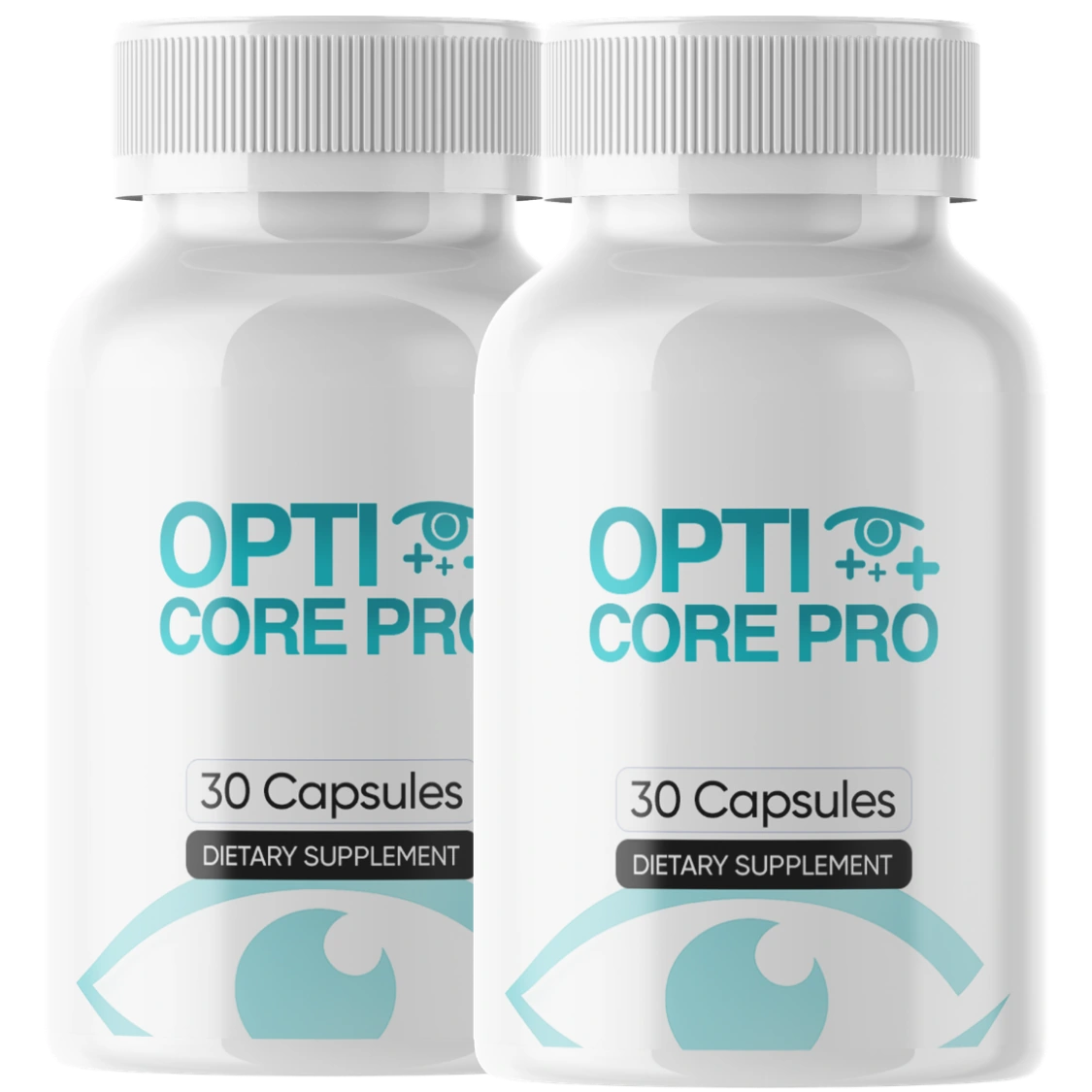
The sensible resolution is to treat the 60 days as the test period and the longer figure as what continued use might involve. Two bottles is sixty capsules, which covers the window with a day to spare, and it is the only pack whose supply and refund window are the same length.
A realistic OptiCore Pro week-by-week expectation
Five stages, tied to how each group of nutrients behaves rather than to a sales page.
Days 1 to 7: nothing, and that is correct
The first week establishes the habit and nothing else. Any change reported in week one is the change that comes with paying attention, which is real but is not the capsule. The only thing worth recording is whether the capsule suits your stomach.
Weeks 2 to 4: water-soluble rows reach steady state
Thiamin, B6, B12, folate, pantothenic acid, biotin and vitamin C are cleared and replaced daily, so their blood levels settle within this period in anyone who was short. This is where the seller's own review summary says most buyers first comment.
Weeks 4 to 8: the fat-soluble rows and the mineral stores
Vitamins A, D and E and the minerals move more slowly because they are stored rather than cleared. Iron stores in particular take months rather than weeks to shift meaningfully.
Day 60: the decision point
The window closes 60 days after the parcel shipped. Whatever you have or have not noticed by then is what you are deciding on, so the honest plan is to make the judgement a few days early rather than on the last afternoon.
Months 3 to 7: the seller's evaluation period
If you continue, this is the stretch the seller's own guidance describes. It is also the period over which any nutritional effect on general wellbeing would be expected to be stable rather than novel.
What OptiCore Pro buyers say about timing
What the seller's own summary says about timing, and what it can establish.
The seller's summary names 3–4 weeks as the commonest wait, and the roster of eight named buyers filed between day 16 and day 56. Every one of them wrote inside the 60-day window, with a median around day 25.
Those figures describe when people wrote, which is not the same as when anything changed. A review filed on day 16 describes two weeks of a routine; one filed on day 56 describes something else entirely, and both appear in the same average.
The recurring complaint in that summary is a slow start and wanting more in the first week, which matches the biology rather than contradicting it. The reviews page prints the whole roster and counts the themes rather than presenting eight rows as eight independent accounts.
How to test OptiCore Pro in a way that tells you something
A four-line diary, a control variable, and two dates to read it on.
- End-of-day eye comfort, one to ten, recorded at the same hour.
- How often you reach for drops in a week.
- Whether evening reading feels tiring, yes or no.
- Screen hours a day, which is the control variable and the one most likely to explain any change.
Two entries a week is enough and more than most people manage. The value is not in the precision; it is in having written something down before you had an opinion, because memory reorganises itself around whatever you decide later.
Hold the other variables steady for the run. Same lighting, same screen distance, same spectacles, same bedtime as far as life allows. Any one of those moves eye comfort more than any nutrient on this panel, and a change in one of them will be read as the capsule working or failing.
Then read the diary at day thirty and again at day fifty-five. The second date is chosen so that a decision to claim the 60-day guarantee is still available, which is the whole point of testing on a schedule rather than on a feeling.
Honest critique: what OptiCore Pro timing cannot promise
What sixty days can settle, and what it cannot.
Nutrition is slow and nutrition is conditional. A capsule closes a gap in somebody who has one, over weeks, and does nothing measurable in somebody who does not. Neither outcome announces itself, which is why the diary above matters more than it looks.
The eye-specific part is slower still, and the honest position is that the amounts on this panel are a fraction of the ones the eye trials used. The 2023 Cochrane review and a review of thirty-five years of eye-supplement research both describe a field where effects, where they exist, are measured over years rather than weeks.
So the fair statement about timing is this: 60 days is long enough to learn whether the capsule suits you, whether the habit sticks and whether you notice anything. It is not long enough to establish anything about eyes, and no supplement window in this category is.
OptiCore Pro timing questions
How long does OptiCore Pro take to work?
The seller's own review summary names 3–4 weeks as the commonest wait. Biologically, water-soluble nutrients reach steady state in two to four weeks and stored nutrients take longer. The seller's page asks for 180 to 210 days to evaluate the product, which sits outside the 60-day refund window.
Should I feel anything in the first week of OptiCore Pro?
No, and expecting to is the commonest reason people stop early. Nothing on this panel acts acutely. The first week establishes the habit, and the only thing worth noting is whether the capsule suits your stomach.
When should I decide whether to keep taking OptiCore Pro?
Around day fifty-five, a few days before the 60-day window closes. Reading your notes early leaves room to start a claim without rushing, and the window runs from the shipping date rather than from the day you opened the box.
Which OptiCore Pro pack matches the guarantee?
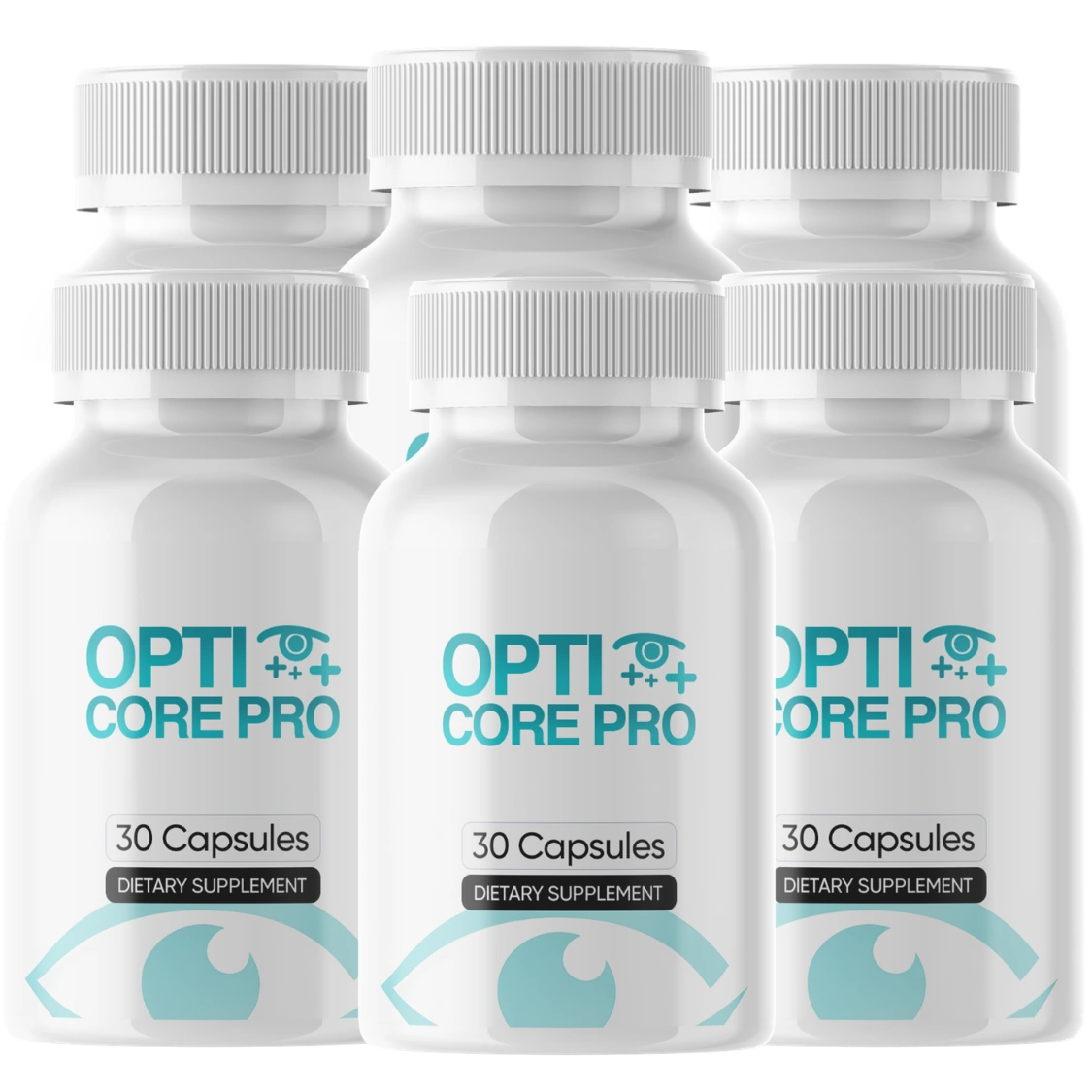
Two bottles. Sixty capsules covers a 60-day window with a day to spare, and it is the only pack whose supply and refund period are the same length. The three and six-bottle packs are cheaper per bottle and run past the window.
Why do some OptiCore Pro reviews mention a slow start?
Because that is what nutrition looks like. It is the recurring complaint in the seller's own summary, and it matches the biology rather than contradicting it. The eight-buyer roster filed between day 16 and day 56.
Does taking more OptiCore Pro make it work faster?
No, and the label says not to exceed the recommended dose. Doubling puts 14.5 mg of iron into one day and moves nothing forward, because repletion is limited by absorption and turnover rather than by how much arrives at once.
Sources behind the OptiCore Pro timeline
The trial durations, the reviews that summarise the field, and the reference intakes behind the repletion figures.
- Age-Related Eye Disease Study Research Group. A randomized, placebo-controlled, clinical trial of high-dose supplementation with vitamins C and E, beta carotene, and zinc for age-related macular degeneration and vision loss: AREDS report no. 8. Arch Ophthalmol. 2001;119(10):1417-36. PMID 11594942. https://pubmed.ncbi.nlm.nih.gov/11594942/
- Chew EY, Clemons TE, Agron E, et al. Long-term effects of vitamins C and E, beta-carotene, and zinc on age-related macular degeneration: AREDS report no. 35. Ophthalmology. 2013;120(8):1604-11.e4. PMID 23582353. https://pubmed.ncbi.nlm.nih.gov/23582353/
- Christen WG, Glynn RJ, Chew EY, et al. Folic acid, pyridoxine, and cyanocobalamin combination treatment and age-related macular degeneration in women: the Women's Antioxidant and Folic Acid Cardiovascular Study. Arch Intern Med. 2009;169(4):335-41. PMID 19237716. https://pubmed.ncbi.nlm.nih.gov/19237716/
- Evans JR, Lawrenson JG. Antioxidant vitamin and mineral supplements for slowing the progression of age-related macular degeneration. Cochrane Database Syst Rev. 2023;9(9):CD000254. PMID 37702300. https://pubmed.ncbi.nlm.nih.gov/37702300/
- Pameijer EM, Heus P, Damen JAA, et al. What did we learn in 35 years of research on nutrition and supplements for age-related macular degeneration: a systematic review. Acta Ophthalmol. 2022;100(8):e1541-e1552. PMID 35695158. https://pubmed.ncbi.nlm.nih.gov/35695158/
- Li SS, Wang HH, Zhang D. Efficacy of different nutrients in age-related macular degeneration: A systematic review and network meta-analysis. Semin Ophthalmol. 2022;37(4):515-523. PMID 34995151. https://pubmed.ncbi.nlm.nih.gov/34995151/
- Institute of Medicine (US) Panel on Micronutrients. Iron. In: Dietary Reference Intakes for Vitamin A, Vitamin K, Arsenic, Boron, Chromium, Copper, Iodine, Iron, Manganese, Molybdenum, Nickel, Silicon, Vanadium, and Zinc. Washington (DC): National Academies Press; 2001. NCBI Bookshelf NBK222309. https://www.ncbi.nlm.nih.gov/books/NBK222309/
- Institute of Medicine (US) Standing Committee on the Scientific Evaluation of Dietary Reference Intakes. Folate. In: Dietary Reference Intakes for Thiamin, Riboflavin, Niacin, Vitamin B6, Folate, Vitamin B12, Pantothenic Acid, Biotin, and Choline. Washington (DC): National Academies Press; 1998. NCBI Bookshelf NBK114318. https://www.ncbi.nlm.nih.gov/books/NBK114318/
- Institute of Medicine (US) Standing Committee on the Scientific Evaluation of Dietary Reference Intakes. Biotin. In: Dietary Reference Intakes for Thiamin, Riboflavin, Niacin, Vitamin B6, Folate, Vitamin B12, Pantothenic Acid, Biotin, and Choline. Washington (DC): National Academies Press; 1998. NCBI Bookshelf NBK114297. https://www.ncbi.nlm.nih.gov/books/NBK114297/
Order OptiCore Pro and give it a fair run
Two bottles is sixty capsules, which is the only pack that matches the 60-day window exactly. Six bottles is $49 a bottle if you already know how you get on.
Two bottles $158 · six bottles $294 · 60-day money-back guarantee
Order OptiCore Pro On The Official WebsiteOne capsule a day · 30 per bottle · lot OPT-26/OP-2761