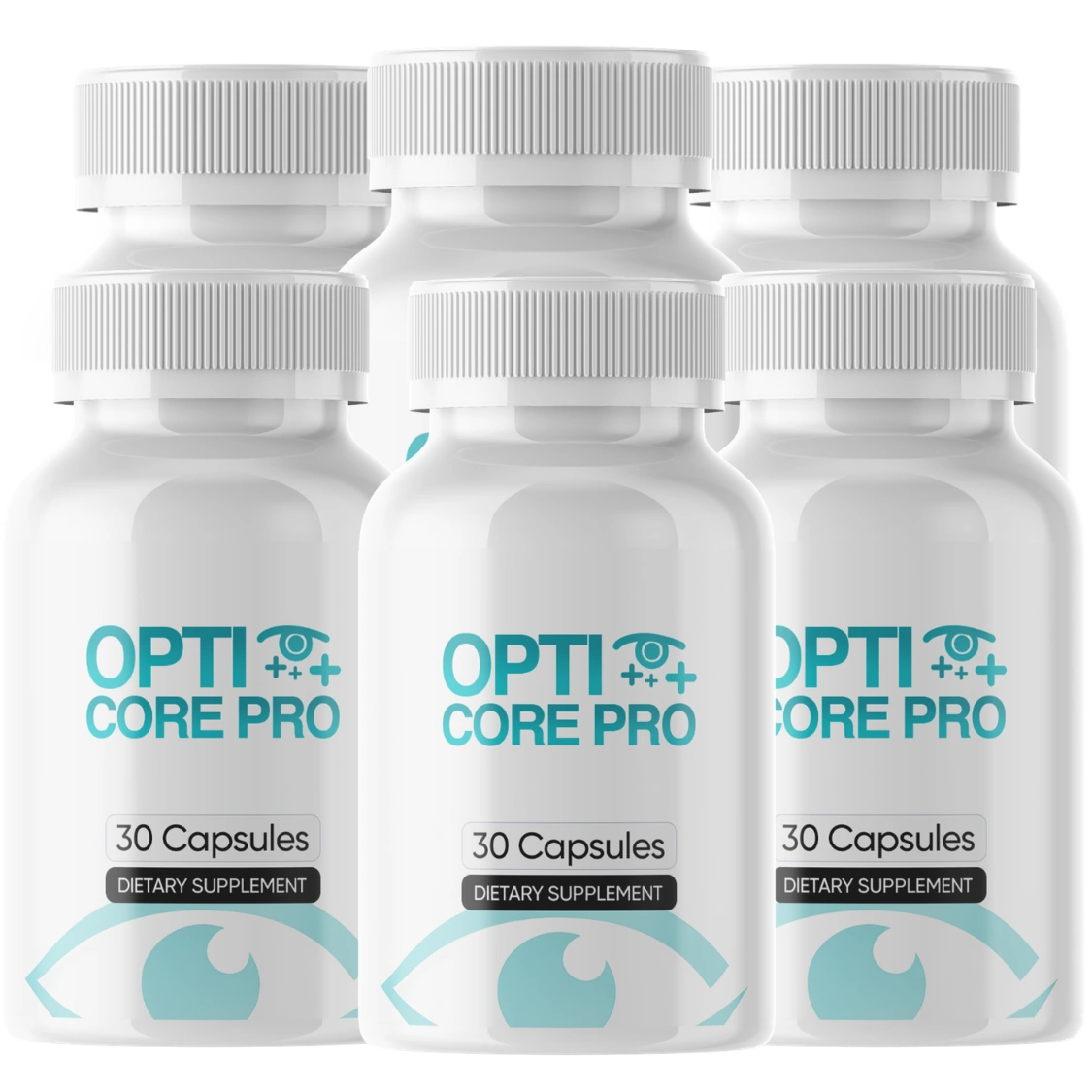
OptiCore Pro Official Website › Benefits
BenefitsOptiCore Pro Benefits: The Three Areas It Supports
OptiCore Pro supports three areas: everyday vision wellness, eye comfort, and eye strain from screens and close work.
It does this with a daily nutrient base across sixteen printed rows. It is not made to sharpen sight or change a prescription.
Next, see what is in each capsule.
Three supported lines, six real ones, and six that are outside what this label can deliver.
The three things OptiCore Pro is sold to support
Three supported lines, their source, and the evidence behind each.
| The supported line | Where it comes from | What sits under it |
|---|---|---|
| Everyday vision wellness | The seller's sales page | The quantified half of the panel, read as nutrition. Vitamins A, C, E, zinc and the B group all have established roles, and all are present at adequacy amounts. |
| Eye comfort | The seller's sales page | The same nutrients, plus the ordinary effect of any daily routine on how somebody reports feeling. No trial of this formula exists. |
| Eye strain and ocular fatigue from screens and close work | The seller's sales page | The weakest of the three. The nutrient evidence in this setting is built on lutein and zeaxanthin, and neither is on this panel. |
The bottle itself carries no benefit claim at all. Every line above comes from the seller's page and is reproduced here as the ceiling on this website.
Those three are the whole of what anyone may say about this capsule, and they are structure and function language rather than medical language. No product in this category is permitted to say more without becoming a drug.
The seller is also unusually direct about the limits, and quoting is fairer than summarising: results depend on diet, exercise, lifestyle and individual body chemistry; the product may not work for everyone; it does not guarantee immediate results; and it is not intended to diagnose, treat, cure or prevent any disease.
What a buyer can reasonably expect from OptiCore Pro
Six things this purchase delivers, stated without inflation.
A daily nutrient floor
Sixteen nutrients at between three and three hundred per cent of a Daily Value, taken every day for months. For anyone eating unevenly this is the concrete benefit, and it is the one with the most evidence behind it.
A habit that is easy to keep
One capsule, one glass of water, one month to a bottle. Adherence is the quiet variable in every supplement trial ever run, and a simple format beats a complicated one over a six-month stretch.
A label you can actually check
Sixteen amounts and eleven named botanicals is more disclosure than most of this category offers, and it is what makes an informed comparison possible at all.
A vegetarian format
Hypromellose rather than gelatin, which rules the product in for people that a gelatin capsule rules out.
A sixty-day decision
The window runs 60 days from the shipping date, opened bottles included, so a genuine trial of two bottles can be finished before the decision has to be made.
A fixed one-time price
Three packs, a single payment each, no subscription, and struck figures that are labelled as the seller's comparison prices rather than presented as a recent selling price.
What each OptiCore Pro nutrient is established to do
What each row does in the body, and why that is not the same as a benefit.
| Nutrient | Its established role | Amount here |
|---|---|---|
| Vitamin A | Required for the visual cycle. Deficiency causes night blindness and is the leading preventable cause of childhood blindness worldwide. | 60 mcg RAE |
| Vitamin C | Antioxidant, collagen synthesis, iron absorption from plant sources. | 60 mg |
| Vitamin D | Calcium handling and bone. Widely short in populations at higher latitudes. | 10 mcg |
| Vitamin E | The principal fat-soluble antioxidant in cell membranes. | 7 mg |
| Thiamin, B6, B12, folate, pantothenic acid | Energy metabolism, amino-acid handling and, for three of them, homocysteine. | 3 mg to 748 mcg DFE |
| Biotin | A coenzyme in fatty-acid synthesis. Human deficiency is rare. | 2,500 mcg |
| Zinc | Hundreds of enzymes, immune function, and a real role in retinal metabolism. | 3.62 mg |
| Iron | Oxygen transport. Shortfall is common in menstruating women. | 7.25 mg |
| Magnesium, calcium, manganese, potassium | Enzyme cofactors, bone, and electrolyte balance. | 2 mg to 60 mg |
Established physiological roles rather than claims about this product. A nutrient having a role is not the same as a supplement of it producing a benefit in somebody already replete.
That distinction is the whole of the honest case for any multivitamin. Every nutrient above does something necessary, and supplying it to somebody who already has enough produces no additional effect. The benefit lives entirely in the gap between intake and requirement, which varies enormously between people and is invisible without testing.
It is also the reason this page does not promise anything specific. A reader with a genuinely thin diet may notice a difference in general terms over a couple of months. A reader who eats well and sleeps badly is more likely to find that the sleep was the variable.
Honest critique: what OptiCore Pro is not going to do
Six things that are outside what this label can deliver, said once and properly.
- It will not sharpen sight or change a spectacle prescription. Nothing in a capsule does that.
- It will not treat, cure or prevent macular degeneration, cataract, glaucoma, dry eye or any other condition, and nothing on the bottle or the sales page claims it will.
- It is not an AREDS or AREDS2 formula and should not be bought as a substitute for one. Three shared ingredients at a fraction of the amounts, and no lutein, zeaxanthin, copper or omega-3.
- It will not reduce screen strain through a mechanism anyone has demonstrated. The carotenoid evidence in that setting rests on two ingredients outside this panel.
- It will not work faster than nutrition works. The trials behind these ingredients ran for years, and the seller's own page asks for six to seven months.
- It has never been tested as a finished product. No study of this capsule exists, which is ordinary for the category and worth saying once.
None of that makes the product a bad one. It makes it a multivitamin with a botanical blend, sold with an eye framing, at a price that is reasonable for the format and backed by a window long enough to test it in.
The reason to say it plainly is that the alternative is worse. A reader who buys this expecting an AREDS2 replacement will be disappointed in a way that a reader who buys it expecting a competent daily capsule will not, and only one of those two outcomes is this desk's fault.
OptiCore Pro against the two things people buy instead
Three alternatives, with the comparison run in whichever direction it falls.
Those are the three honest comparisons, and two of them go against this product. Somebody who wants an AREDS2 formula should buy one; somebody who wants lutein should buy lutein.
The third comparison is the interesting one, because it is the closest match. Against a plain multivitamin this capsule offers a botanical blend nobody can quantify and an eye framing the label itself does not make, at a higher price. What it also offers is full disclosure of sixteen amounts and eleven botanical names, which is worth something to a reader who intends to check.
OptiCore Pro benefit questions
What are the main benefits of OptiCore Pro?
The seller supports three: everyday vision wellness, eye comfort, and eye strain from screens and close work. What the panel supports concretely is a daily nutrient floor across sixteen rows, in a format that is easy to keep up, with the amounts printed so you can check them.
Will OptiCore Pro improve my eyesight?
No. No supplement changes visual acuity or a spectacle prescription, and neither the bottle nor the sales page claims it does. The three supported lines are about comfort and wellness rather than sight.
Does OptiCore Pro help with screen fatigue?
It is one of the three things the seller supports. The evidence base in that setting rests on lutein and zeaxanthin, which are outside this panel, and the meta-analysis of tested interventions points at the mechanical fixes rather than the nutritional ones. Blink breaks and screen distance move it more reliably than any capsule.
Is OptiCore Pro worth the money?
At $49 a bottle on the six-pack it is priced like a premium multivitamin, which is broadly what it is. Whether that is worth it depends on how much value you place on the botanical blend and the eye framing, because the sixteen quantified rows are available more cheaply elsewhere.
Does OptiCore Pro have any proven benefit?
The finished product has never been trialled, which is ordinary in this category. The individual nutrients have established physiological roles, and correcting a genuine shortfall in any of them produces a real effect. Neither statement is a claim about what this capsule will do for a particular person.
Can OptiCore Pro replace eating vegetables?
No, and the carotenoid gap is the clearest illustration. Kale, spinach, sweetcorn and egg yolk supply lutein and zeaxanthin, which this panel does not carry at all. A capsule is a floor under a diet rather than a substitute for one.
Sources for what OptiCore Pro is claimed to do
The trials and reviews behind each supported line, including the ones that found nothing.
- Institute of Medicine (US) Panel on Micronutrients. Vitamin A. In: Dietary Reference Intakes for Vitamin A, Vitamin K, Arsenic, Boron, Chromium, Copper, Iodine, Iron, Manganese, Molybdenum, Nickel, Silicon, Vanadium, and Zinc. Washington (DC): National Academies Press; 2001. NCBI Bookshelf NBK222318. https://www.ncbi.nlm.nih.gov/books/NBK222318/
- Age-Related Eye Disease Study Research Group. A randomized, placebo-controlled, clinical trial of high-dose supplementation with vitamins C and E, beta carotene, and zinc for age-related macular degeneration and vision loss: AREDS report no. 8. Arch Ophthalmol. 2001;119(10):1417-36. PMID 11594942. https://pubmed.ncbi.nlm.nih.gov/11594942/
- Age-Related Eye Disease Study 2 Research Group. Lutein + zeaxanthin and omega-3 fatty acids for age-related macular degeneration: the Age-Related Eye Disease Study 2 (AREDS2) randomized clinical trial. JAMA. 2013;309(19):2005-15. PMID 23644932. https://pubmed.ncbi.nlm.nih.gov/23644932/
- Evans JR, Lawrenson JG. Antioxidant vitamin and mineral supplements for slowing the progression of age-related macular degeneration. Cochrane Database Syst Rev. 2023;9(9):CD000254. PMID 37702300. https://pubmed.ncbi.nlm.nih.gov/37702300/
- Pameijer EM, Heus P, Damen JAA, et al. What did we learn in 35 years of research on nutrition and supplements for age-related macular degeneration: a systematic review. Acta Ophthalmol. 2022;100(8):e1541-e1552. PMID 35695158. https://pubmed.ncbi.nlm.nih.gov/35695158/
- Singh S, McGuinness MB, Anderson AJ, et al. Interventions for the Management of Computer Vision Syndrome: A Systematic Review and Meta-analysis. Ophthalmology. 2022;129(10):1192-1215. PMID 35597519. https://pubmed.ncbi.nlm.nih.gov/35597519/
- Hu W, Shankar P, Yao Y, et al. Effect of xanthophyll-rich food and supplement intake on visual outcomes in healthy adults and those with eye disease: a systematic review, meta-analysis, and meta-regression of randomized controlled trials. Nutr Rev. 2023;82(1):34-46. PMID 37094947. https://pubmed.ncbi.nlm.nih.gov/37094947/
- Li SS, Wang HH, Zhang D. Efficacy of different nutrients in age-related macular degeneration: A systematic review and network meta-analysis. Semin Ophthalmol. 2022;37(4):515-523. PMID 34995151. https://pubmed.ncbi.nlm.nih.gov/34995151/
- Miller JW, Smith A, Troen AM, et al. Excess Folic Acid and Vitamin B12 Deficiency: Clinical Implications? Food Nutr Bull. 2024;45(1_suppl):S67-S72. PMID 38987872. https://pubmed.ncbi.nlm.nih.gov/38987872/
- Patel DP, Swink SM, Castelo-Soccio L. A Review of the Use of Biotin for Hair Loss. Skin Appendage Disord. 2017;3(3):166-169. PMID 28879195. https://pubmed.ncbi.nlm.nih.gov/28879195/
- Institute of Medicine (US) Panel on Micronutrients. Zinc. In: Dietary Reference Intakes for Vitamin A, Vitamin K, Arsenic, Boron, Chromium, Copper, Iodine, Iron, Manganese, Molybdenum, Nickel, Silicon, Vanadium, and Zinc. Washington (DC): National Academies Press; 2001. NCBI Bookshelf NBK222317. https://www.ncbi.nlm.nih.gov/books/NBK222317/
- Institute of Medicine (US) Panel on Micronutrients. Iron. In: Dietary Reference Intakes for Vitamin A, Vitamin K, Arsenic, Boron, Chromium, Copper, Iodine, Iron, Manganese, Molybdenum, Nickel, Silicon, Vanadium, and Zinc. Washington (DC): National Academies Press; 2001. NCBI Bookshelf NBK222309. https://www.ncbi.nlm.nih.gov/books/NBK222309/
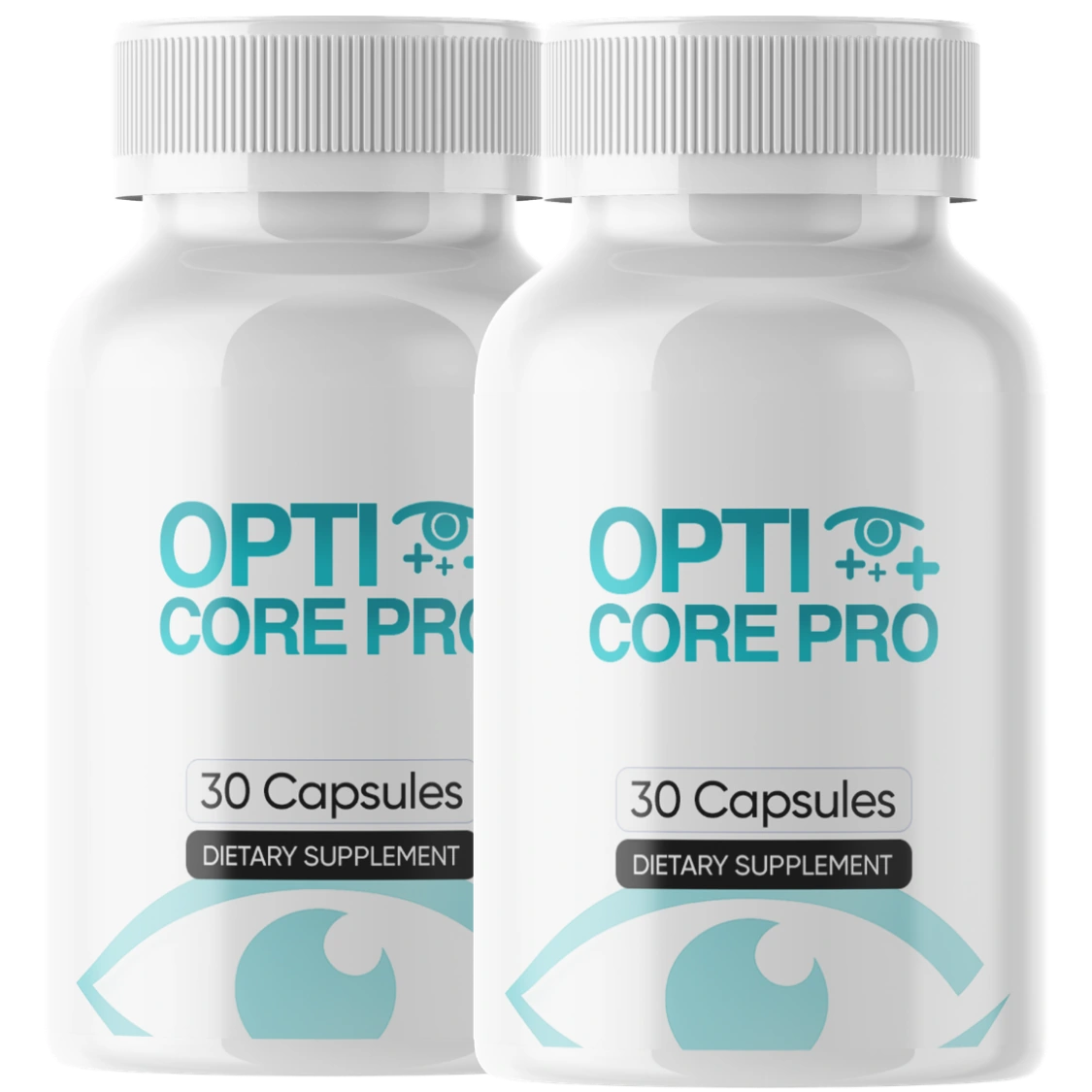
Order OptiCore Pro for what it actually is
A sixteen-row daily capsule with a botanical blend, from $49 a bottle, with 60 days from the shipping date to decide.
Two bottles $158 · six bottles $294 · 60-day money-back guarantee
Order OptiCore Pro On The Official WebsiteOne capsule a day · 30 per bottle · lot OPT-26/OP-2761