OptiCore Pro Official Website › Guides
GuidesVision Supplement Guides
Two long pages with nothing to sell. One works through the published research across this category one trial at a time, negatives included. The other turns that research into seven questions short enough to ask at a shelf, and ends by putting all seven to the product on sale here, which fails four of them.
Neither page names this product until its own argument is finished.
The two guides
Two long pages, and the reason a retailer publishes either of them.
What the evidence supports across vision supplements
AREDS, AREDS2 and the Cochrane reviews, read for what they established and for what they did not. Lutein and zeaxanthin, the two omega-3 trials that found nothing, why copper travels with high-dose zinc, the one randomised trial behind the B vitamins, and what the screen-strain literature actually points at.
Seven checks to run on any eye-supplement label
Seven questions short enough to ask at a shelf: whether every ingredient has an amount, whether the carotenoids are there, how the antioxidants compare with their trials, whether copper accompanies high zinc, whether the botanicals name a species and a part, whether a seal names anybody, and whether the refund window can be dated. The house product answers three of them well.
Both are written for somebody who leaves without ordering anything, which is the only way a guide published by a retailer is worth reading. Neither names this product until the evidence has been set out on its own terms.
Of the two, the scorecard has the sharper edge. Its last section puts all seven questions to OptiCore Pro and records four failures. A scorecard that awarded the house product seven out of seven would establish only that the house had written it.
The category in ten lines
Ten claims a shopper will meet, each with what the research actually found.
| The claim you will meet | What the evidence says |
|---|---|
| Antioxidants protect eyes | One high-dose formula slowed progression of macular degeneration in people who already had it. It did nothing for cataract and it does not prevent the disease starting. |
| Lutein and zeaxanthin are the important ones | They have the best modern support, at 10 mg and 2 mg a day, and they are the pair the screen-hours research is built on. |
| Fish oil helps eyes | Two large trials, at 1 gram and at 3 grams a day, found nothing for macular degeneration and nothing for dry eye. |
| Zinc is the active ingredient | It has the most independent support in the formula, and at trial amounts it needs copper beside it to avoid depressing copper status. |
| B vitamins protect the retina | One randomised trial, at amounts far above any multivitamin, reported fewer cases. It has not been replicated. |
| Beta-carotene is dangerous | At 20 to 30 mg a day in smokers, in two trials. Not at the fraction of a Daily Value a multivitamin carries. |
| Blue-light glasses reduce eye strain | The Cochrane review found no benefit for eye strain. |
| The 20-20-20 rule is established | The habit is sensible. The three numbers were never derived from a trial. |
| A long ingredient list means a strong formula | Presence and amount are different questions, and a proprietary blend answers only the first. |
| Supports eye health means something specific | It is the strongest phrase any supplement is legally allowed to use, so the best and the worst product on a shelf both say it. |
Every line here is argued at length, with citations, inside the guide itself.
That table is the first guide compressed, and it is deliberately blunt. Five of the ten lines are corrections rather than confirmations, which is roughly the ratio anybody reading this category honestly ends up with.
The one that costs this website the most is the ninth. A formula whose botanicals sit inside a single blend total cannot be scored on amount, and that includes the product sold here.
Where to start, depending on what you want to know
Five situations, and the section that answers each one.
- If you have symptoms nobody has examined, neither guide is the right first step. Flashes, floaters, pain, redness or a change in sight belong with an optometrist or an ophthalmologist, and everything else here assumes that step is done.
- If you are comparing two labels in a shop, open the scorecard and use checks one, two and three. Forty seconds, and it answers most purchases.
- If you have read about AREDS and want to know what it actually established, start at the second section of the first guide, which sets out all five trial reports and what each one measured.
- If you are buying for screen hours specifically, read the screen-strain section first. The meta-analysis points at blink breaks, screen distance and the right working-distance correction before it points at anything swallowed.
- If you want to know why this product is built the way it is, read the scorecard to the end. Four failures and three passes, with the reasoning on each.
The order matters more than it looks. A reader who starts at the scorecard gets a tool and no context; a reader who starts at the guide gets context and no way to use it in a shop. Together they are one thing split in two.
Neither guide mentions this product until its own argument is finished, which is the only arrangement under which a retailer's guide is worth a reader's time.
One more practical note about reading order. The seven checks are quick to apply and slow to understand, which is the opposite of how most shopping advice works. Anybody can ask whether a label prints an amount for every ingredient; knowing why that question comes first takes the four paragraphs the guide spends on proprietary blends. So the short version sits at the top of both pages and the long one underneath it, and either half stands on its own.
Why a retailer publishes guides at all
One commercial reason, one honest one, and what neither changes.
The commercial answer is that a website which only sells is a website nobody links to. The honest answer is that this category is unusually badly served by the writing around it, and the gap is worth filling whether or not it sells anything.
Most of what a shopper finds about eye supplements repeats two errors. The first is treating AREDS as though it established that antioxidants are good for eyes in general, when it tested one formula at specific amounts in people at specific risk. The second is treating an ingredient list as though presence and amount were the same thing.
Both guides are built to correct those two errors rather than to praise anything. The first sets out what each trial actually measured; the second gives a reader a way to ask the amount question at a shelf, without needing to remember any of it.
What this desk earns is a commission on completed orders, disclosed here as it is everywhere else on this site and on the about page. It does not change either guide, and the clearest evidence for that is the scorecard, which fails the house product on four of its own rows.
What these guides deliberately leave out
Four subjects these two pages stay out of, and what is left once they are gone.
Prescription treatment. Injections, laser and the surgical management of eye disease are outside the scope of a supplement guide entirely, and a website selling capsules is the wrong place to read about them.
Individual brand comparisons. Naming competitors and scoring them would turn a scorecard into a ranking, and a ranking published by a retailer is an advertisement with numbers in it. The seven checks work on any label, which is the point of writing them as questions rather than as verdicts.
Dietary advice beyond one line. The carotenoids this category is built on come from dark leafy greens, sweetcorn and egg yolk, more cheaply than from any capsule. That is the whole of what a supplement guide should say about food, and repeating it in every section would be padding.
Anything about children. The product this website sells is restricted by its own label to adults of 18 and over, and eye nutrition in childhood is a separate literature with separate answers.
What is left after those four exclusions is narrow on purpose: what the published trials gave, what they found, and how to ask a label whether it resembles any of it. That is a smaller subject than eye health, and it is one a retailer can write about without pretending to a competence it does not have.
Both guides are re-read whenever a figure on this website changes, and the review date at the foot of each one moves with it. The current date is September 2026. A correction, a better citation or a trial that changes one of the ten lines above goes to [email protected] and onto the page itself rather than into a footnote.
How these guides are sourced
Four of the papers both guides are built on, listed here so the method is visible before you open either one.
- Age-Related Eye Disease Study Research Group. A randomized, placebo-controlled, clinical trial of high-dose supplementation with vitamins C and E, beta carotene, and zinc for age-related macular degeneration and vision loss: AREDS report no. 8. Arch Ophthalmol. 2001;119(10):1417-36. PMID 11594942. https://pubmed.ncbi.nlm.nih.gov/11594942/
- Age-Related Eye Disease Study 2 Research Group. Lutein + zeaxanthin and omega-3 fatty acids for age-related macular degeneration: the Age-Related Eye Disease Study 2 (AREDS2) randomized clinical trial. JAMA. 2013;309(19):2005-15. PMID 23644932. https://pubmed.ncbi.nlm.nih.gov/23644932/
- Evans JR, Lawrenson JG. Antioxidant vitamin and mineral supplements for slowing the progression of age-related macular degeneration. Cochrane Database Syst Rev. 2023;9(9):CD000254. PMID 37702300. https://pubmed.ncbi.nlm.nih.gov/37702300/
- Singh S, McGuinness MB, Anderson AJ, et al. Interventions for the Management of Computer Vision Syndrome: A Systematic Review and Meta-analysis. Ophthalmology. 2022;129(10):1192-1215. PMID 35597519. https://pubmed.ncbi.nlm.nih.gov/35597519/
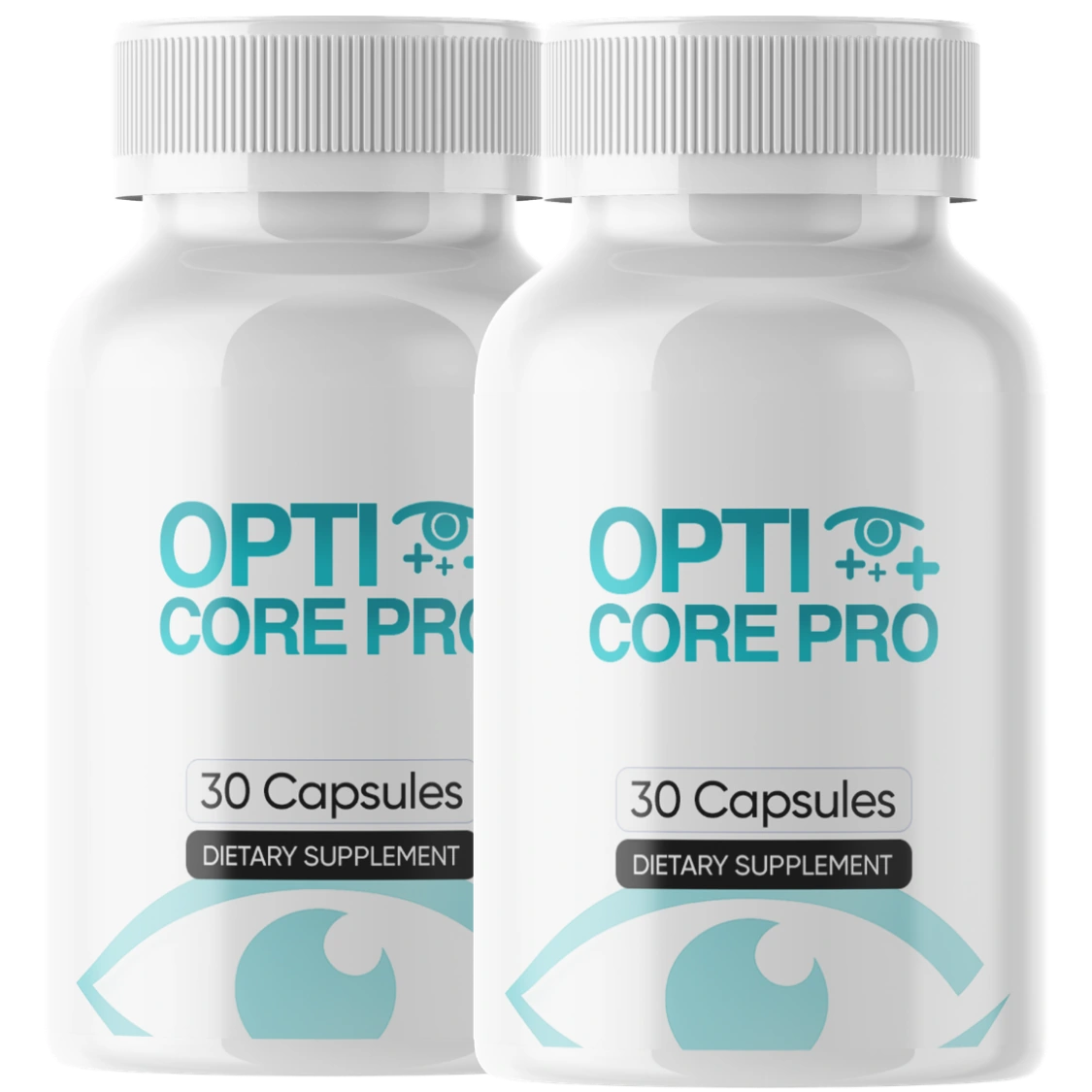
Order OptiCore Pro after reading the scorecard, not before
Sixteen printed amounts, eleven named botanicals, and 60 days from the shipping date if the answer turns out to be no.
Two bottles $158 · six bottles $294 · 60-day money-back guarantee
Order OptiCore Pro On The Official WebsiteOne capsule a day · 30 per bottle · lot OPT-26/OP-2761