OptiCore Pro Official Website › Blog › Lutein-Free Eye Formulas
What Can A Lutein-Free Eye Formula Actually Do?
Most eye supplements on sale are built around two carotenoids. A good number are not, including the one this website sells. That is worth understanding rather than dismissing, because the answer is neither nothing nor everything.
- Lutein and zeaxanthin are the two pigments that concentrate in the macula, which is why they have the most direct evidence in this category.
- AREDS2 added them at 10 mg and 2 mg a day, and a later analysis put them in place of beta-carotene.
- A formula without them is a multivitamin with an eye framing, which is a real thing rather than a fraudulent one.
- What a multivitamin does is close a dietary gap, and vision is genuinely nutrient-dependent at the bottom of the intake range.
- What it does not do is add macular pigment, which is the measurement the carotenoid research runs on.
Why two carotenoids became the default
Lutein and zeaxanthin are not antioxidants in general. They are specific pigments that accumulate in one tissue, the macula, and give it the yellow colour that its name comes from. That anatomical fact is the reason they have better evidence than anything else in this category.
AREDS2 added them to the original formula at 10 mg and 2 mg a day. The headline result was that the addition produced no significant benefit over the original formula overall, which is often misreported. What changed practice was the secondary analysis, which found them a better choice than beta-carotene, particularly in people whose dietary intake of the carotenoids was low.
Outside macular disease the case is thinner and it is the part relevant to most buyers. A one-year contrast-sensitivity trial and a meta-analysis of xanthophyll intake report changes in macular pigment density and in visual performance measures. These are smaller studies with softer endpoints than AREDS, and they are still the best nutritional evidence anyone has for everyday visual comfort.
| Ingredient | Why a modern eye formula carries it | Amount the research used |
|---|---|---|
| Lutein | It is one of the two pigments that concentrate in the macula and give it its colour, so the link to the tissue is anatomical rather than inferred. | 10 mg a day |
| Zeaxanthin | The other macular pigment, and the one that sits at the very centre of the fovea. | 2 mg a day |
| Vitamin C | An antioxidant present at high concentration in ocular tissue. | 500 mg a day |
| Vitamin E | The principal fat-soluble antioxidant in cell membranes. | 400 IU a day |
| Zinc | A cofactor in retinal enzymes, and the ingredient with the most independent support in the original formula. | 80 mg, later tested at 25 mg |
| Copper | Included only to offset what high-dose zinc does to copper status. | 2 mg a day |
Amounts read from the published trial reports. A formula carrying none of the first two is making a different argument from the one this table describes.
What is left when they are absent
Take the two carotenoids out of the table above and what remains is a set of nutrients with established physiological roles and no specific macular argument. That is a real product category, and calling it a fake eye supplement is lazy.
It is also a different product. A formula built on vitamins, minerals and botanicals is making a nutritional claim: that supplying these substances daily does something for somebody whose intake is short. A formula built on lutein and zeaxanthin is making an anatomical one: that these pigments accumulate in a specific tissue and that more of them there is measurable.
Neither claim is stronger in the abstract. They are answerable by different evidence, and a shopper who conflates them ends up disappointed by whichever one they bought.
| What a carotenoid-free multivitamin can do | What it cannot do |
|---|---|
| Close a genuine dietary shortfall in any of the nutrients it carries. | Add macular pigment, which is what the two carotenoids are measured by. |
| Supply vitamin A, which the visual cycle genuinely requires. | Reproduce the contrast-sensitivity work, which used lutein and zeaxanthin. |
| Provide zinc at an amount inside the upper intake level. | Reproduce the AREDS result, which used twenty times as much zinc. |
| Be taken every day for months without difficulty, which is where adherence lives. | Substitute for an eye examination when something has actually changed. |
The left column is not a small version of the right one. They are different claims with different evidence behind them.
The adequacy argument, and its condition
The strongest thing a carotenoid-free formula can say is the least exciting: it closes dietary gaps. That argument is genuinely well supported and it comes with a condition attached that almost nobody prints.
The condition is that you have a gap. Nutrient repletion produces an effect in somebody who is short and produces nothing measurable in somebody who is not, and the difference is invisible without testing. Two people taking the same capsule for six months can have entirely different outcomes for reasons that have nothing to do with the capsule.
Who is most likely to have one
- Anyone eating a narrow diet for any reason, including cost, time or appetite.
- Shift workers, whose eating pattern rarely matches a supermarket's idea of three meals.
- Anyone who has recently changed diet substantially, in either direction.
- Older adults, whose absorption of several nutrients including vitamin B12 declines.
- Anyone recovering from illness or surgery, when intake drops while requirement rises.
Who is least likely to
- Anyone already taking a multivitamin, which duplicates most of the same rows.
- Anyone eating a varied diet with vegetables most days.
- Anyone whose main complaint is eye strain from screens, which is mechanical rather than nutritional in origin.
Vitamin A is the one row with a direct visual job
If a carotenoid-free formula has one genuinely eye-relevant nutrient, it is vitamin A, and the reason is biochemical rather than associative. Retinal, the aldehyde form, is the molecule that changes shape when light hits the retina. Without it the visual cycle does not run.
Deficiency causes night blindness and, at the severe end, is still the leading preventable cause of childhood blindness worldwide. The Institute of Medicine reference intakes exist because that relationship between intake and function is real and measurable.
What that relationship does not do is continue upward. Correcting a shortfall restores function; adding more on top of adequacy does nothing extra, and preformed vitamin A accumulates in a way that has its own upper limit. A formula supplying a modest amount as beta-carotene, which the body converts on demand, is the conservative way to do it.
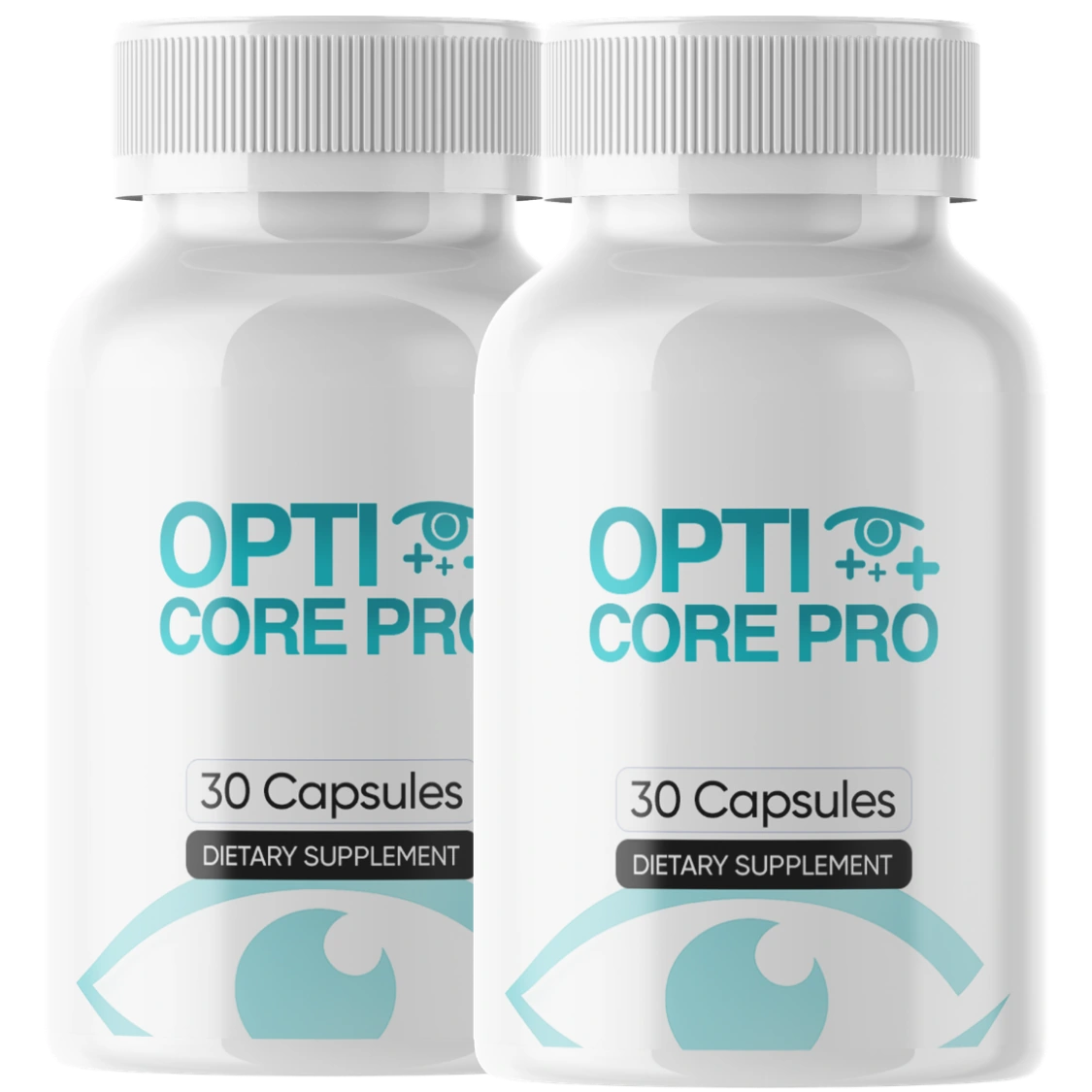
See what OptiCore Pro prints on its own panel
Sixteen nutrients with an amount beside each, eleven botanicals in one blend, and no lutein or zeaxanthin anywhere. The whole panel is reproduced on this website, including the rows that are small.
Two bottles $158 · six bottles $294 · 60-day money-back guarantee
Order OptiCore Pro On The Official WebsiteOne capsule a day · 30 per bottle · lot OPT-26/OP-2761
Zinc, and the amount question
Zinc is the ingredient with the most independent support in the original eye formula, and it is also the clearest illustration of why amounts decide everything.
The trial figure was 80 mg a day of zinc oxide, sustained for years. The adult tolerable upper intake level is 40 mg a day, which is half of it, and the trial carried copper alongside precisely because sustained high zinc depresses copper status.
A multivitamin carrying three or four milligrams of zinc is doing something different and entirely defensible: topping up an ordinary intake, comfortably inside every limit, with no need for copper because there is nothing to offset. What it is not doing is reproducing a trial, and a label that implies otherwise has crossed a line that the arithmetic makes obvious.
Who a carotenoid-free formula suits
- Somebody who wants one capsule a day rather than a stack, and will actually keep it up.
- Somebody whose diet has real gaps and who wants a floor under it.
- Somebody who already eats leafy greens and eggs regularly, and is therefore getting the carotenoids from food.
- Somebody who takes no other multivitamin and no separate iron.
- Somebody who wants to read printed amounts before paying, which is a smaller group than it should be and a better served one here than in most of this category.
Who it does not suit is a shorter list and a sharper one: anybody who came looking specifically for lutein, anybody buying primarily because of screen hours, and anybody expecting to reproduce a trial result.
Getting the carotenoids from food instead
This is the part a supplement website has least commercial reason to write and the most practical reason to.
Lutein and zeaxanthin are abundant in a small number of ordinary foods, and the amounts involved are not exotic. A serving of cooked kale or spinach carries several milligrams; sweetcorn and egg yolk are the two best sources of zeaxanthin specifically, and egg yolk has the useful property that its fat improves absorption of both.
Anyone taking a carotenoid-free formula who is worried about the gap has a cheap and well-evidenced answer available in a supermarket, and it does not conflict with the capsule in any way.
A daily multivitamin for the nutrient floor, and greens or eggs a few times a week for the carotenoids. That covers both arguments at a lower cost than any single product that tries to do both, and it is what this desk would tell a friend.
Four questions worth asking of any eye formula
- Are lutein and zeaxanthin on the label, and at what amounts? The benchmarks are 10 mg and 2 mg. Presence at a tenth of that is presence without the evidence.
- Are the antioxidant amounts near their own trial figures? 500 mg of vitamin C and 400 IU of vitamin E are the numbers to compare against.
- If the zinc is high, is copper there? If it is not high, copper is not needed and its absence is correct.
- Does everything carry its own amount? A proprietary blend gives a total, which makes every member of it unscoreable.
Those four take under a minute at a shelf and they separate products that look identical from the front. The longer version is on the scorecard, which applies seven of them to this product and records four failures.
Nothing here is medical advice, and no nutrient discussed above treats, cures or prevents any eye condition. OptiCore Pro is a dietary supplement, it is not FDA-approved, and the seller supports three hedged lines about everyday vision wellness, eye comfort and screen-related strain. A change in vision itself belongs with an optometrist or an ophthalmologist rather than with any capsule.
References
- Age-Related Eye Disease Study 2 Research Group. Lutein + zeaxanthin and omega-3 fatty acids for age-related macular degeneration: the Age-Related Eye Disease Study 2 (AREDS2) randomized clinical trial. JAMA. 2013;309(19):2005-15. PMID 23644932. https://pubmed.ncbi.nlm.nih.gov/23644932/
- Age-Related Eye Disease Study 2 (AREDS2) Research Group, Chew EY, Clemons TE, et al. Secondary analyses of the effects of lutein/zeaxanthin on age-related macular degeneration progression: AREDS2 report No. 3. JAMA Ophthalmol. 2014;132(2):142-9. PMID 24310343. https://pubmed.ncbi.nlm.nih.gov/24310343/
- Stringham JM, O'Brien KJ, Stringham NT. Contrast Sensitivity and Lateral Inhibition Are Enhanced With Macular Carotenoid Supplementation. Invest Ophthalmol Vis Sci. 2017;58(4):2291-2295. PMID 28431432. https://pubmed.ncbi.nlm.nih.gov/28431432/
- Hu W, Shankar P, Yao Y, et al. Effect of xanthophyll-rich food and supplement intake on visual outcomes in healthy adults and those with eye disease: a systematic review, meta-analysis, and meta-regression of randomized controlled trials. Nutr Rev. 2023;82(1):34-46. PMID 37094947. https://pubmed.ncbi.nlm.nih.gov/37094947/
- Institute of Medicine (US) Panel on Micronutrients. Vitamin A. In: Dietary Reference Intakes for Vitamin A, Vitamin K, Arsenic, Boron, Chromium, Copper, Iodine, Iron, Manganese, Molybdenum, Nickel, Silicon, Vanadium, and Zinc. Washington (DC): National Academies Press; 2001. NCBI Bookshelf NBK222318. https://www.ncbi.nlm.nih.gov/books/NBK222318/
- Institute of Medicine (US) Panel on Micronutrients. Zinc. In: Dietary Reference Intakes for Vitamin A, Vitamin K, Arsenic, Boron, Chromium, Copper, Iodine, Iron, Manganese, Molybdenum, Nickel, Silicon, Vanadium, and Zinc. Washington (DC): National Academies Press; 2001. NCBI Bookshelf NBK222317. https://www.ncbi.nlm.nih.gov/books/NBK222317/